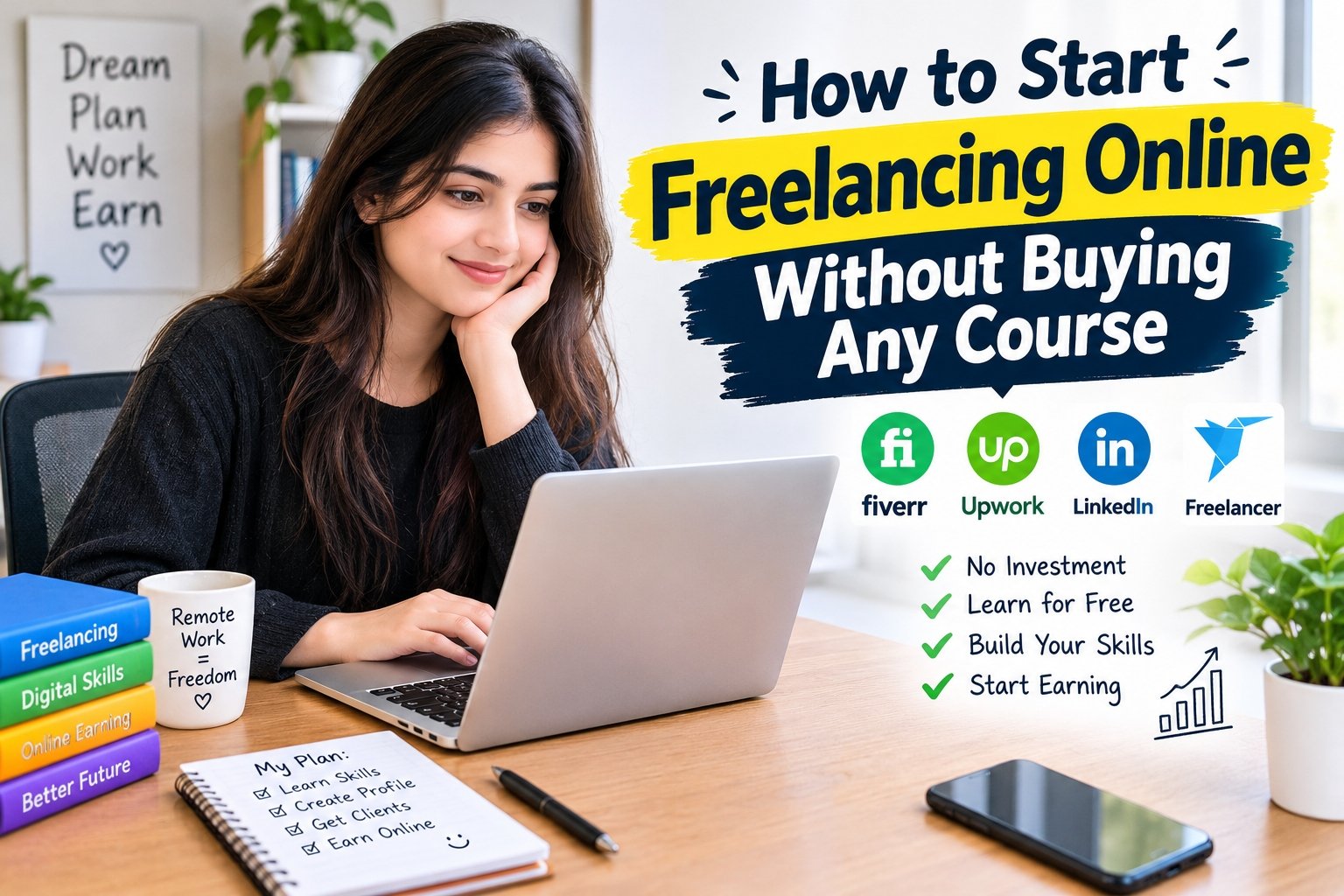
Freelancing is one of the easiest ways to start working online without spending money on expensive courses. Many beginners believe they need professional training before they can earn money online, but this is not always true. You can learn useful skills through free online resources, practice at home, and gradually build your freelancing career.
If you have a computer or smartphone and an internet connection, you can start learning today. The most important things are patience, regular practice, and the ability to solve problems for clients.
In this guide, you will learn how to start freelancing online without buying any course, which free skills you can learn, and how to find your first client.
What Is Freelancing?
Freelancing means providing services to clients without working as a permanent employee for one company. You can work from home, choose projects according to your skills, and communicate with clients online.
For example, a freelancer may write blog posts, design social media images, edit videos, create websites, or manage business social media accounts.
Freelancers usually receive payment for completing projects, working hours, or delivering agreed services. Your income depends on your skills, experience, client demand, and the amount of work you receive.
1. Choose One Skill You Can Learn for Free
The first step is to choose a skill that you can learn without paying for a course. Avoid trying to learn everything at once. Focus on one service and practice it until you can produce good results.
Here are some beginner-friendly freelancing skills:
- Content writing: Write blog posts, website content, and product descriptions.
- Graphic design: Create social media posts, banners, and simple advertisements.
- Video editing: Edit short videos for YouTube, Instagram, and TikTok.
- Virtual assistance: Help businesses with emails, research, data organization, and daily tasks.
- Social media management: Prepare posts, organize content, and help businesses maintain their social media pages.
- Website development: Learn how to create basic websites using free learning resources.
Choose a skill that matches your interests and the equipment you already have. For example, content writing and virtual assistance may be good starting points if you have a basic computer and reliable internet access.
2. Learn Freelancing Skills Using Free Resources
You do not need to buy an expensive course to understand the basics of freelancing. Many websites provide free educational content, tutorials, and practical examples.
You can learn from YouTube tutorials, free articles, official software documentation, and beginner guides. Search for specific lessons instead of watching random videos for hours.
For example, if you want to become a content writer, learn how to write clear introductions, organize headings, research topics, and check grammar. If you prefer graphic design, practice creating attractive designs with free tools.
The goal is not simply to watch tutorials. You must apply what you learn by completing small projects.
3. Practice Before Looking for Clients
Practice is an important part of starting a freelancing career. Clients want to see what you can do, so create sample work that demonstrates your abilities.
For example, a beginner content writer can prepare three original blog posts on different topics. A graphic designer can create five social media designs for imaginary businesses. A video editor can make a few short sample videos.
You can create these projects without having a real client. Clearly identify them as practice samples rather than paid client work.
Review your work carefully and improve it before showing it to potential clients. Quality samples can help you build confidence and demonstrate your skills.
4. Create a Simple Portfolio for Free
A portfolio is a collection of your best work. It allows potential clients to understand your skills before hiring you.
You do not need to purchase a website or pay for a professional portfolio when you are starting. You can organize your samples using free document-sharing tools, a public portfolio page, or a simple online presentation.
Your portfolio should include:
- A short introduction about yourself.
- The service you offer.
- Three to five strong work samples.
- The tools you can use.
- Your professional contact information.
Keep your portfolio organized and easy to understand. Do not include work that you cannot explain or reproduce yourself.
5. Create a Freelancing Profile
After choosing a skill and preparing your samples, create a professional profile on a freelancing platform.
Popular platforms include Fiverr, Upwork, and Freelancer. Visit their official websites to review registration requirements, available services, fees, and current account rules.
Your profile should explain what you offer and how your service can help a client. Use a clear description rather than making unrealistic promises.
For example, a beginner writer could describe their service as writing clear, well-organized blog posts for websites and small businesses.
Choose a relevant profile title, describe your abilities honestly, and add your best samples where the platform allows it. Some platforms have different rules for new freelancers, so check their requirements before creating an account.
6. Find Your First Freelancing Client
Getting your first client can take time, especially when you have no reviews or professional experience. Instead of waiting for someone to contact you, actively search for suitable opportunities.
You can look for projects on freelancing platforms, contact small businesses with a professional message, or use relevant professional communities where service offers are permitted.
When contacting a potential client, explain how you can help with a specific task. Avoid sending the same generic message to everyone.
For example, if a small business has poorly organized social media posts, you could offer to create a consistent set of designs. If a website needs articles, you could share a relevant writing sample.
Never pay someone who promises guaranteed freelancing jobs. Be cautious of suspicious offers, requests for unnecessary personal information, and clients who ask you to work extensively without an agreed payment arrangement.
7. Start With Small Projects
As a beginner, you may find it easier to secure a small project than a large contract. Choose tasks that match your current abilities and can be completed within a reasonable period.
Before starting, discuss the project requirements, deadline, price, number of revisions, and payment method with the client.
You can offer a reasonable introductory rate while building your portfolio, but avoid promising unlimited work for very little money. Your time and effort have value.
After completing the project, check your work carefully and deliver it according to the agreement. Professional communication and meeting deadlines can help you build a good reputation.
8. Use Free Tools to Improve Your Work
Free tools can help you complete projects more efficiently. The best tools depend on the service you choose.
For example, writers can use document editors and grammar-checking tools. Beginners in graphic design can explore free design software, while video editors can practice with free editing applications.
You can also use spreadsheets to organize client details, deadlines, project progress, and payments.
Always review your final work instead of relying entirely on automated tools. Check accuracy, originality, spelling, formatting, and any client-specific instructions before delivering a project.
9. Follow a Simple 30-Day Freelancing Plan
A practical plan can help you stay focused instead of jumping between different skills.
Days 1–7: Choose and learn a skill
Select one freelancing service and study free tutorials. Practice the basic techniques every day.
Days 8–14: Create sample projects
Prepare several examples that show what you can do. Review your work and improve any weak areas.
Days 15–20: Build your portfolio and profile
Organize your best samples, write a clear introduction, and create a profile on a suitable platform.
Days 21–30: Search for projects
Apply for relevant opportunities, contact suitable potential clients, and improve your proposals based on the responses you receive.
This plan gives you a starting structure, but it does not guarantee that you will earn money within 30 days. Some people find their first client quickly, while others need more practice and time.
10. Common Freelancing Mistakes Beginners Should Avoid
Many new freelancers struggle because they expect immediate results or try to offer too many services at once.
Avoid these common mistakes:
- Learning multiple skills without developing any one of them properly.
- Copying another freelancer’s portfolio or profile description.
- Claiming experience you do not have.
- Sending poorly written proposals to unrelated projects.
- Accepting work without understanding the requirements.
- Paying for courses because someone promises guaranteed income.
- Ignoring platform rules and payment protection.
- Giving up after a few unsuccessful applications.
Freelancing is a learning process. Use rejection and feedback to identify areas where you can improve.
Can You Start Freelancing Without Investment?
Yes, you can begin learning and preparing for freelancing without buying a course. Free tutorials, practice projects, and basic portfolio tools can help you get started.
However, completely cost-free freelancing is not guaranteed in every situation. You may need internet access, a suitable device, or certain paid tools as your work grows. Some platforms also charge service fees or have paid features.
Start with the resources you already have and avoid unnecessary spending until you understand your chosen skill and the needs of your clients.
Final Words
Starting freelancing online without buying any course is possible when you focus on learning practical skills and building experience. You do not need to know everything before taking your first step.
Choose one service, learn through free resources, prepare original work samples, and create a simple portfolio. Then begin applying for suitable projects and communicating professionally with potential clients.
Remember that freelancing is not a guaranteed way to make quick money. Your progress will depend on the quality of your work, your consistency, and the demand for your services. Start small, continue learning, and improve with every project.
You can begin building your freelancing career today without spending money on an expensive course.